

As soon as there are a few shakes, it happens again. The ever-rising front through which you have tried to breathe, distract yourself, or delay is already taking over. You tense, you try to hold back, hoping that this time it will be different. But that’s not it. Once again, you reached orgasm much sooner than you wanted.
At this point, you feel defeated and disconnected, both from your partner and from yourself.
Premature ejaculation (PE) can feel like your body is working against you: uncooperative, difficult to deal with, and deeply frustrating. And without a definitive cure, many people are faced with trial-and-error treatments that don’t produce the results they want.
However, a new wave of technology-based treatments is emerging, offering a potentially drug-free, on-demand alternative. A 2024 study in IJIR: Your journal of sexual medicine discusses preliminary research on how it may help people with pulmonary embolism delay ejaculation.
Although more study is needed, the results offer hope for a better quality of life and a sense of control in the bedroom.
What is premature ejaculation?

The International Society of Sexual Medicine (ISSM) defines premature ejaculation according to three criteria:
1. Ejaculation occurs very quickly after vaginal penetration.
2. During most or all sexual intercourse involving vaginal penetration, there is a persistent inability to delay ejaculation.
3. The experience leads to personal stress, frustration, or avoidance of sexual intimacy.
Persistent premature ejaculation, which begins with a person’s first sexual experience and continues over a long period of time, usually peaks within a minute. In acquired premature ejaculation, which develops after a period without ejaculation problems, this usually occurs within three minutes.
This definition focuses specifically on heterosexual vaginal sex. There is little information on how to define premature ejaculation in the context of anal sex or same-sex dating.
Because PE is often self-reported and diagnosed on the basis of distress rather than obvious medical signs, its true prevalence is difficult to measure. Previous studies have reported that 20-30% of men suffer from PE. However, more recent research using stricter criteria suggests the true rate is closer to 5%.
What causes premature ejaculation?
The exact causes of premature ejaculation are not fully understood.
However, in the case of permanent PE, experts believe that it is mainly due to changes in brain chemicals that help regulate ejaculation. Increased sensitivity of the tip of the penis, erection difficulties, genetic differences, hormonal imbalances and prostate problems may also play a role.
In contrast, acquired PE is usually associated with medical, psychological, or relational problems.
Common Treatments for Premature Ejaculation

Since the 1990s, premature ejaculation has been primarily treated with topical anesthetics, antidepressants, and behavioral therapy. Although it provides temporary relief for some, PE often returns when stopped.
Local anesthetics such as numbing creams or sprays before sex are not popular. Up to 75% of men say they are dissatisfied, and only about 10% continue to use them.
Selective serotonin reuptake inhibitors (SSRIs) can delay ejaculation by increasing serotonin levels. However, many men stop using them due to their weak effect.
Behavior therapy teaches techniques to build self-confidence and reduce fears during sex. In the short term, it helps 45 to 65% of men, although the long-term effects are still uncertain.
Technical treatments for premature ejaculation
Looking for additional solutions, Dr. Ilan Gruenwald and Dr. Arik Shechter describe new research-based technologies in their article “New Technologies for the Treatment of Premature Ejaculation”.
Neuromuscular stimulation
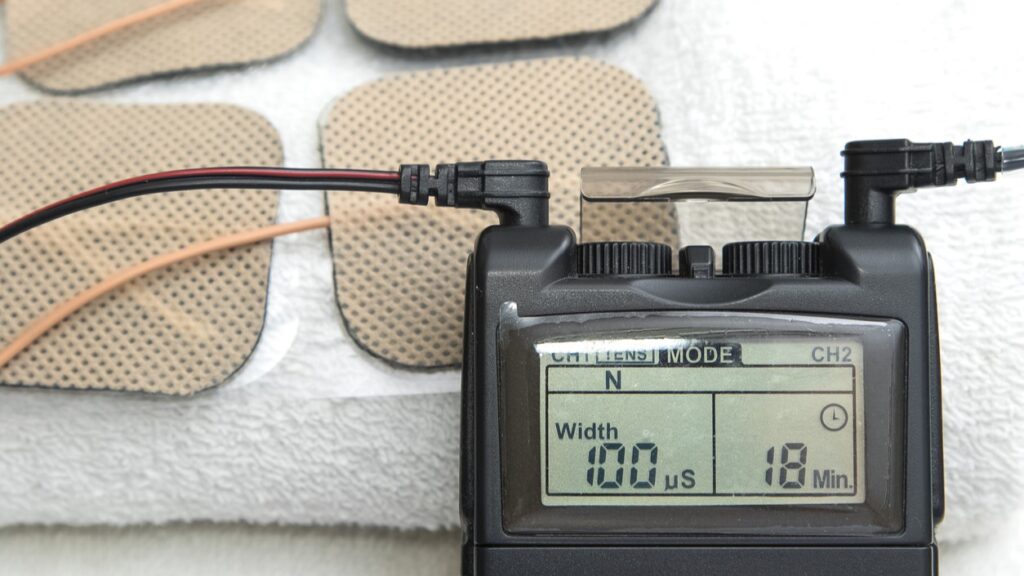
In their own 2017 study, Shechter and colleagues tested transcutaneous electrical nerve stimulation (TENS) in the perineal region of 23 men with lifelong PE. The aim was to use TENS to keep the main pelvic muscles slightly tense, which could interfere with the reflex triggering ejaculation.
The results showed a significant increase in ejaculation time from 124.6 seconds to 311.4 seconds. Most participants tolerated the treatment well, although some reported discomfort or pain during the sessions.
The In2 Patch®
Building on these promising results, a needs-based miniaturized perineal TENS device, called In2 Patch®, was developed. A 2019-2020 study by Shechter and colleagues tested the device in 59 men with lifelong PE and compared it to a placebo patch.
In the active group, the average time to ejaculation increased from 67 to 123 seconds – a significant improvement. There was also a slight increase in the placebo group, from 63 to 81 seconds, but this was not statistically significant.
No serious side effects occurred. However, two mild issues were reported: one participant experienced vibration-related discomfort near an old scar and another experienced pelvic pain during sex.
Posterior tibial nerve stimulation
Another technique the researchers looked at was transcutaneous posterior tibial nerve stimulation (TPTNS), which targets nerves involved in seed accumulation and release.
In a small phase II study, 54% (6 of 11) of men saw their ejaculation time triple with minimal side effects. A second attempt with 60 men had only moderate success. The placebo group also improved, probably due to the sensation of contact with the probe.
Masturbation assist devices
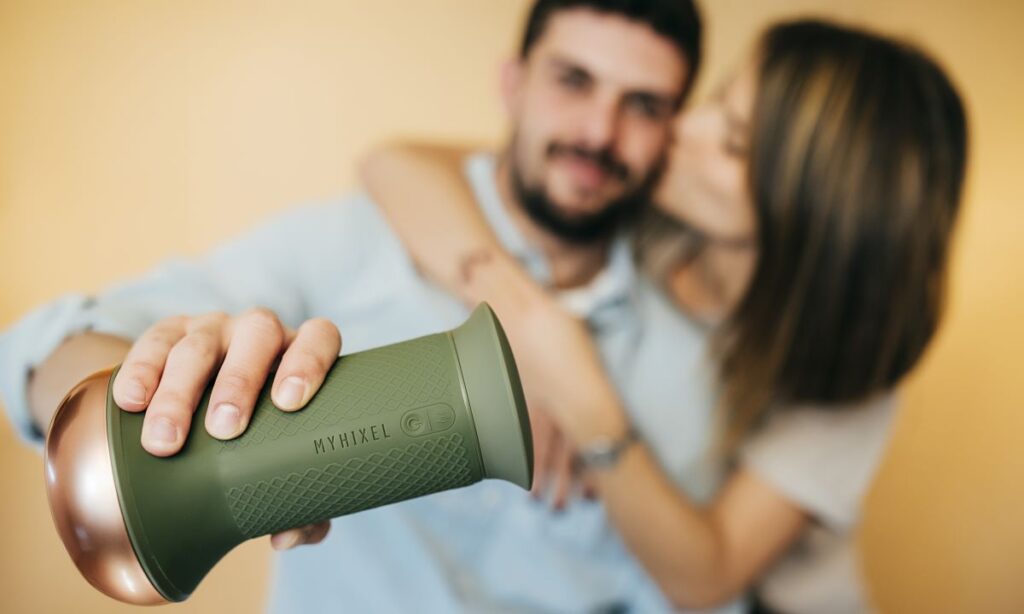
Beyond nerve stimulation, researchers have also explored physical tools to retrain the arousal response. One approach combines behavioral training with the Myhixel® device, a masturbation device designed to reduce sensitivity and simulate sexual intercourse.
In one clinical trial, 52 men completed an eight-week sphincter control program; Half used the Myhixel® device alongside the training.
Although only 40 participants completed the study, those who used the device lasted about 90 seconds longer during sex. In comparison, the group that trained alone only improved by 30 seconds.
The results suggest the device could improve behavioral training through more targeted stimulation.
Advanced treatment for premature ejaculation
There is no longer a reliable, long-term solution to premature ejaculation, but early research into new technologies is promising.
From nerve stimulation patches to smart exercise devices, these innovations have resulted in a significant increase in ejaculation time with minimal side effects. Non-invasive and drug-free, they could mark a shift toward more flexible on-demand treatment options that make spontaneous sex easier than with creams or pills that must be used beforehand.
However, larger and longer-term studies are needed to confirm their effectiveness. Future research should also examine how PE affects same-sex relationships, anal sex, and casual or current relationships.
In an environment focused on trust, connection and fun, innovations are not only welcome, they are long overdue.
This article was originally published on The Shaw.